






Articles
Latest from our team
Engineering-led content on protection and reliability.

Latest
Every Last Drop Counts: Improving Pipette Tip Performance for Precision Biomedical Applications
In many biomedical and life science environments, success can depend on something almost impossible to see.
Read article ›
New Website for P2i – Built Around a Smarter Way to Protect Electronics
P2i has launched its new website, designed to better reflect how the business works today and its approach to solution-led protection for electronics, medical devices, materials, and more.
Read article ›

P2i Meets US Manufacturers to Tackle Electronics Protection Challenges
Stephen Coulson and Justin Kleingartner returned from a US tour visiting manufacturers in California, Michigan, and Minnesota — exploring how P2i's solutions-led approach addresses liquid damage and corrosion across hearing aids, drones, and automotive electronics.
Read article ›

Protecting Hearing Aids with Precision
As hearing aid miniaturisation accelerates and sustainability requirements tighten, manufacturers need protection that works at the molecular level — without compromising repairability, audio performance, or environmental compliance.
Read article ›
Cases
Real protection, real results
How leading OEMs solved field reliability with P2i coatings.

TWS Earphones — Parylene Replaced at Scale
99.97%
first-pass yield reached
P2i's Barrier Coating was qualified as Plan of Record across all earphone and TWS device lines at the OEM's China and Vietnam factories. First-pass yield reached 99.97%. Scrap was reduced from a 3% plateau to zero. Masking requirements were eliminated. Full reworkability was maintained post-coating. The transition from parylene was completed without production interruption.
Read case study →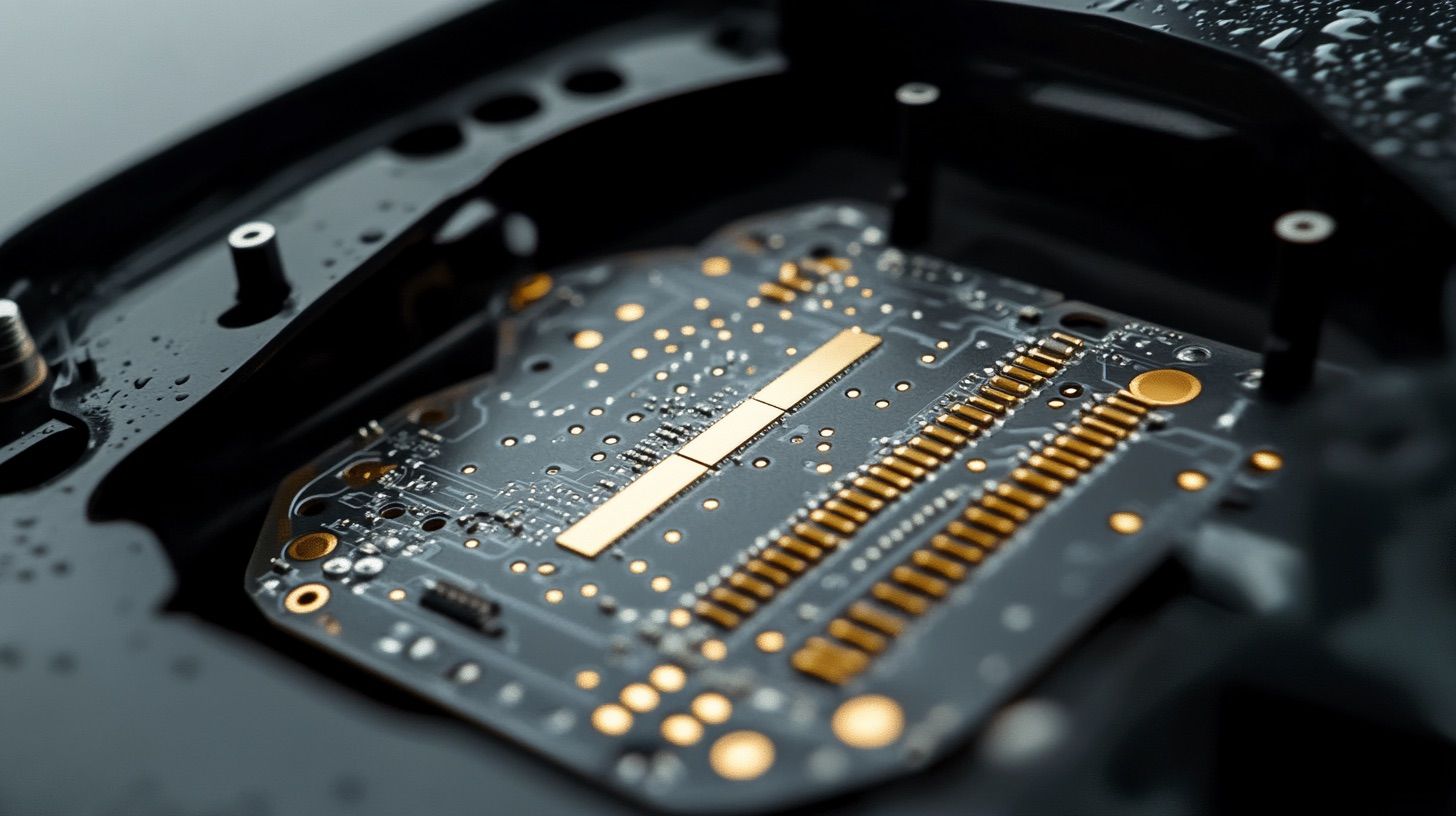
Consumer Electronics — Field Failure Reduction
90%+
reduction in field failure returns
Following qualification of P2i's Splash-Proof plasma coating across the production line, the manufacturer achieved a 90%+ reduction in field failure returns. The coating was applied at end-of-line with no hardware change, no masking requirement for standard geometries, and full reworkability maintained. No change to audio or sensor performance was recorded across the device portfolio.
Read case study →
Ready to discuss your protection challenge?
Our engineers have seen it. Talk to the team that qualified protection at the hardest end of electronics manufacturing.